

Placement moves are chaotic. There's so much to coordinate and hand over that dental care often gets lost in the shuffle. Continuity of dental care is often disrupted, and children may no longer be able to access their previous dentist.
This matters because children in care already face oral health inequalities. Placement moves make things worse. Evidence suggests that placement instability is associated with poorer access to dental care and increased unmet dental need in looked-after children.¹ A child might arrive at a new placement with untreated decay, no dental records, and no idea when they last saw a dentist.
If you're unsure what dental information needs to transfer during placement moves, how to maintain routines through transitions, or what steps to take before and after a move, this guide is for you.
What Information Should Transfer
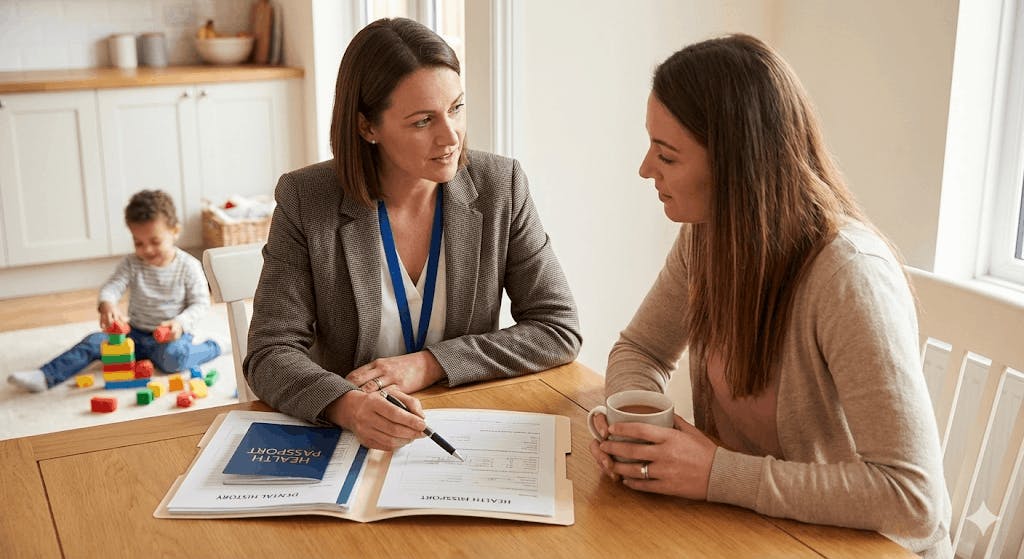
When a child transitions to a new placement, the new caregiver needs to have enough information to continue the child's dental care without starting from scratch. Here are the key points to consider:
The key information
Dental registration. If the child's current dentist's contact details are unavailable, note this and plan to assist the new caregiver in locating a suitable dental practice. Provide the child's last known dental visit date and any treatment summaries if available, to support ongoing care even when records are incomplete.
Treatment status. Outline any ongoing treatments or scheduled appointments for the child.
Daily routine. Explain the child's brushing routine, including when it occurs, where it occurs, and who assists them. Share what methods have been effective.
What helps. If the child experiences dental anxiety, detail approaches that have helped them in the past. This can significantly reduce the time required to rebuild trust.
Preferences. If the child's preferences regarding toothbrush types, toothpaste flavours, or sensory sensitivities are unknown, note this and plan to observe and adapt to their needs during the transition. These small details can help maintain a sense of familiarity during the transition and support their comfort.
For children with additional needs or sensory sensitivities, this information is particularly important. What may appear as resistance in a new environment could simply be a shift in their established routine.
Health passports
Health passports offer a structured way to record and share this information. Some local areas use health passports that include dental health alongside other health needs.²
If your local authority utilises health passports, ensure that the dental section is completed before the child’s move.
Before, During, and After a Move
Before the move
If you know a placement change is coming, gather the child's dental information while you still have easy access to it. Note down the following:
Note down:
- Dentist's name, address, and phone number
- Date of the child's last visit
- Any upcoming appointments
- A summary of what works for the brushing routine
Write down this information even if it seems obvious, as the person receiving the child will not know these details.
Brief summary example:
"Brushes teeth in the morning and at bedtime, prefers a green toothbrush, needs reminders but cooperates once reminded, likes strawberry toothpaste. Dental appointment booked for March 15th."
That's enough for the new carer to continue without disruption.
During handover
Include dental information in the placement handover alongside other health needs.⁵ If you’re using a health passport, ensure the dental section is complete.
Whenever possible, share information directly with the new carer rather than relying solely on paperwork. A brief conversation about "what works" for the child is often more helpful than written notes.
In the conversation:
"Their brushing routine is going really well now, in the mornings and at bedtime. I just need to remind them, but they are cooperative. They're registered with Dr Khan at Meadow Dental Practice; their last check-up was in January, and there were no problems. They have an appointment booked for March 15th."
This takes just two minutes and provides the new carer with exactly what they need.
After the move
Week one: Keep the routine going
The priority in the first few weeks is to maintain the brushing routine. Even if everything else is changing, keeping this consistent will provide some predictability for the child.
Stick to the same brushing times (morning and bedtime) and use the same toothpaste, if possible. This is not the time to make changes.
Weeks 2-4: Sort out registration
If the child has moved to a new area, they will need to register with a new dentist within the first few weeks.³
How to find a dentist:
- Use the NHS website to search for practices accepting new patients.
- Ask your current dentist if they can take on the child.
- Contact the child's social worker for local recommendations.
You do not need the child's previous dental records to register, although these can be helpful if available.
If treatment was underway:
If treatment was underway with a previous dentist, contact them to understand the planned treatment and obtain a summary of it. The new dentist can continue the treatment plan from there.
Most practices are willing to provide this information when they know a looked-after child has moved.
When Placements Are Uncertain
In short-term or emergency placements, maintaining continuity can be challenging, but some basics can still be upheld:
Keep brushing going
Even if everything else is uncertain, maintain the brushing routine. The goal is to brush twice a day with a fluoride toothpaste, typically 1450 ppm, unless advised otherwise by a dentist⁴. If the child isn’t used to brushing, doing it even once a day is better than nothing.
For urgent problems
For urgent dental issues during a placement move, NHS 111 can direct you to emergency dental services. You do not need to be registered with a dentist to access emergency care.
If another move is likely
If a child is likely to move again soon, keep a written note of their dental information. This ensures it can travel with them to the next placement without any details being lost.
What This Means for the Child
When dental care continues smoothly through a placement move, it minimises change for the child. Their teeth remain healthy, their routine stays familiar, and someone has paid attention to the details of their care. These small things matter when everything else feels uncertain.
Maintaining dental care during transitions is essential for showing a child that their needs will be met, no matter where they are.⁶
Quick Reference
Information to share during handover
- Dentist's name and contact details
- Registration status
- Any current treatment or upcoming appointments
- What works for their brushing routine
- Dental anxiety and helpful approaches
After a move
- Continue the brushing routine from day one
- Register with a new dentist within the first few weeks
- Contact the previous dentist if treatment was underway
For urgent dental problems
- Call NHS 111 for emergency dental access
- No registration required for emergency care
When to Get Help
Involve the designated nurse for looked-after children (via the child’s social worker):
- There are difficulties registering with a dentist in the new area
- Treatment was interrupted, and you're unsure how to continue it
- The child has complex dental needs
Seek urgent dental care when:
- Facial swelling, especially near the eye or spreading down the neck
- Severe pain affecting eating or sleeping
- Fever alongside dental symptoms
- Significant bleeding from the mouth
For urgent problems, call NHS 111 or take the child to an emergency dental service.

