

You're responsible for managing placement paperwork, therapy appointments, school liaisons, and everything else that comes with foster care. Given all these responsibilities, it's understandable that oral health often gets overlooked.
However, children in care tend to have significantly higher rates of untreated tooth decay. Research indicates that 36% of looked-after children aged 5 to 11 have experienced tooth decay in their primary teeth.¹ A painful tooth can disrupt sleep, affect eating, hinder concentration at school, and impact their overall sense of being cared for.
If you’re unsure how to start a brushing routine with a child who has never had one, how to manage resistance or sensory challenges, or what dental support is available through the NHS for children in care, this guide is for you.
Why Oral Health Matters

Children often enter care with significant unmet oral health needs, which is not uncommon. In our experience, many children have missed regular tooth brushing routines and dental visits, sometimes for years.
This situation is concerning because tooth decay can cause considerable pain. When a child experiences a toothache, it can impact their ability to eat, sleep, and concentrate.2 They may struggle to express their discomfort, especially if they have learned to endure the pain.
Good oral health involves more than just having healthy teeth; it also contributes to comfort, confidence, and a sense of being cared for. By helping a child establish a regular brushing routine, you provide them with something predictable and gentle during a time that may be chaotic.
While you may already be juggling many responsibilities, maintaining oral health doesn't have to be complicated. A few minutes of consistent and patient care can make a significant difference over time.
Understanding the Child's Experience

Children in care are more likely to experience tooth decay compared to other children. Research shows that 36% of looked-after children aged 5 to 11 have experienced tooth decay in their primary teeth.⁷
Why children may have missed out
Before entering care, a child may have faced several challenges, including:
- Lack of a regular brushing routine at home
- Limited access to toothpaste or toothbrushes
- A diet high in sugary foods and drinks
- No access to routine dental care or dental visits
- Adults who were unable to prioritise dental care
None of this is the child's fault. They simply haven't had the opportunity to learn these habits.
Why a child might resist brushing
When a child resists tooth brushing, it often points to underlying issues. Understanding these reasons can help you respond appropriately:
Sensory sensitivities. The feel of the bristles, the taste of toothpaste, or the sensation of someone near their face may be overwhelming. Some children find mint toothpaste too strong.
Need for control. Children who have experienced a lack of control in their lives may resist anything that feels imposed upon them. Brushing can feel like just another task being done to them.
Past experiences. For some children, personal care routines can trigger difficult memories. Having an adult close to their face or mouth may cause anxiety.4
Unfamiliarity. If a child has never brushed regularly, the entire process may feel strange and confusing.
Shame. A child may feel embarrassed about their teeth, especially if they have been teased or know something is wrong.
In our experience, resistance to brushing usually decreases once a child feels safe and the routine becomes more predictable. This process takes time.
Signs to watch for
You know the child in your care the best. Look out for the following signs:
- Complaints of a toothache or sensitivity to hot and cold foods
- Avoidance of certain foods, especially hard or chewy ones
- Persistent bad breath that does not improve with brushing
- Visible holes, dark spots, or brown marks on teeth
- Red, swollen, or bleeding gums
- Swelling on the face or jaw
- Difficulty sleeping due to pain
- Changes in eating habits
If you notice any of these signs, the child needs to see a dentist. Don't wait for them to complain, as many children often don't report pain, especially if they've learned to cope with it.
Building a Brushing Routine
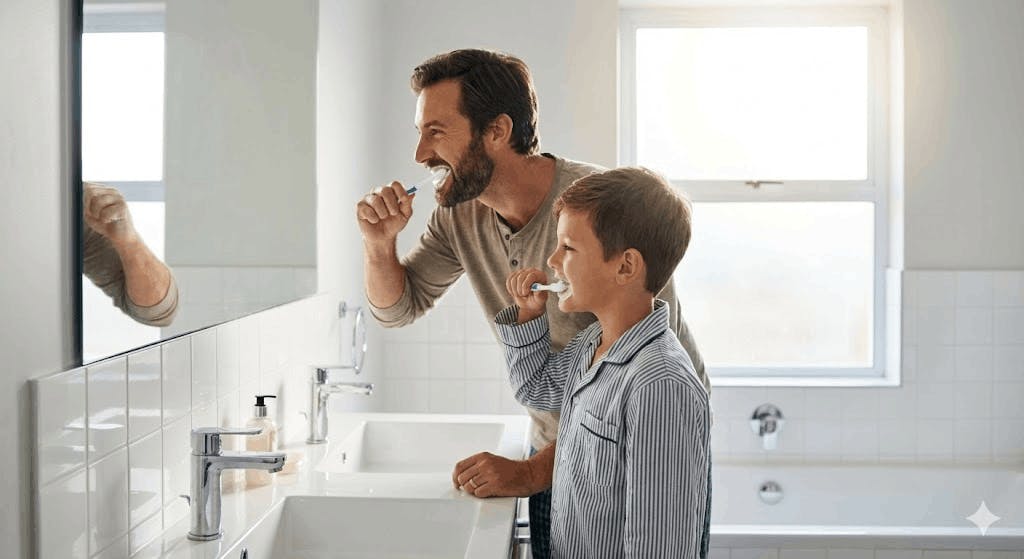
The goal is to brush twice a day with fluoride toothpaste. However, achieving this may take time, and that's perfectly fine.
What matters most is making progress, not aiming for perfection from the very beginning.
Starting the conversation
Begin gently. You might say:
- "Let's get you your own toothbrush. What colour would you like?"
- "I brush my teeth every morning and night. Would you like to try?"
- "Your teeth are really important. I'm going to help you look after them."
Avoid asking if they’ve brushed before or commenting on the condition of their teeth. Keep the conversation simple and focused on the future.
First steps
Let the child lead where possible.
Let them choose. Take them to buy their own toothbrush and toothpaste. Having ownership helps.
Let them explore. Before expecting them to brush correctly, allow them to hold the toothbrush, apply a tiny amount of toothpaste, and get used to the feel.
Brush alongside them. Children learn by watching, so brush your own teeth at the same time so they can copy you.
Keep it short at first. Even 30 seconds is a good start. You can gradually work up to two minutes over time.
Same time, same place. Routines feel safer when they're predictable. Aim for morning and bedtime, in the same bathroom, following the same sequence.
When they resist
If a child refuses or struggles, don't force it. Forcing can create negative associations that make things more difficult in the long run. Instead, try the following:
Instead:
- Acknowledge their feelings. "I can see you don't want to do this right now. That's okay."
- Offer choices. "Would you like to brush first, or should I show you? Do you want the blue toothbrush or the green one?"
- Try a different time. If bedtime's already difficult, try after breakfast first.
- Make it playful. Use a two-minute timer, play a favourite song, or brush a toy's teeth first to make it fun.
- Step back if needed. Some days, a quick rinse with water is better than a battle. Tomorrow is another opportunity.
The key is to focus on "good enough, often enough." Consistency over time is more important than achieving perfection every day.
What good brushing looks like
Once the child's ready:
Brush twice a day. Morning and last thing at night.
Brush for two minutes each time. Use a timer or an app to help.
Use fluoride toothpaste. Use toothpaste containing 1,350–1,500ppm fluoride (commonly 1450ppm). Check the tube.³
Use the right amount. A smear for children under 3, and a pea-sized amount for children aged three and over.
Spit, don't rinse. After brushing, spit out the excess toothpaste, but do not rinse with water. This allows the fluoride to stay on the teeth longer.
Brush all surfaces. Clean the front, back, and chewing surfaces of every tooth while angling the brush towards the gum line.
For children under 7, you will need to help with brushing or at least supervise closely. Even older children may need reminders.
If toothpaste's a problem
Some children hate the taste or texture of standard toothpaste. Options include:
- Trying a milder, non-mint flavour (many children's toothpastes are fruit-flavoured)
- Using a very small amount at first
- Trying a different brand
The most important thing is that the toothpaste contains an appropriate level of fluoride, typically 1,350–1,500 ppm (commonly 1450 ppm).
Supporting Dental Visits
Regular dental check-ups are important for preventing problems and catching issues early. Children in care are entitled to free NHS dental treatment.
Registering with a dentist
When a child arrives in your care, make sure to support them to access NHS dental care as soon as possible.² This is essential for meeting their health needs.
If you're unsure how to find an NHS dentist, you can:
- Ask your own dentist if they can take the child
- Search on the NHS website for dentists accepting new patients
- Ask the child's social worker for local options
You do not need the child’s previous dental records to access NHS dental care, although these can be helpful if available.
Preparing an anxious child
Many children in care may feel anxious about dental visits, especially if they have had painful experiences before or have never been to a dentist.6
Here are some strategies to help:
- Use the modelling approach. Take the child to your own dental appointment or to a sibling's appointment before their first visit. This way, they can observe the process without feeling pressured. They can sit in the waiting room, watch you go in and out, and see that it’s not frightening.
- Talk about what will happen. Use simple language to explain the procedure: "The dentist will count your teeth and check that they are healthy. You’ll sit in a special chair that goes up and down, and they might use a little mirror to look inside your mouth."
- Be honest. It’s important not to make promises about pain relief if you’re unsure. You can say: "The dentist will be gentle. If anything feels uncomfortable, you can raise your hand, and they will stop."
- Visit at a calm time. Schedule visits when the child is likely to be rested and not hungry.
- Bring comfort items. A favourite toy or object can help.
What to tell the dentist
When you meet with the dental team, inform them about:
- That the child is in foster care
- Any known dental history (if you have it)
- Any anxieties or sensory sensitivities the child might have
- What approaches work well with the child.
Dental teams are experienced in working with anxious children and can adapt their approach if they know what to expect.
If they can't cope yet
Some children may not be ready for a dental examination, and that’s perfectly fine. It might take several visits of just waiting in the reception area, or meeting the dentist without opening their mouth, before they feel comfortable.
A good dental team will understand this. If you feel the practice isn't supportive, it's reasonable to try a different one.
If a child has significant dental anxiety or complex needs, consult your dentist for advice on local options for additional support.
What Becomes Possible

Building a routine for oral health requires patience. Progress may be slow, and setbacks can happen, but don’t be discouraged; the outcome is well worth the effort.
A child with healthy teeth can eat comfortably, smile confidently, and sleep pain-free. They also learn that someone cares enough to help them take care of themselves.
Establishing a brushing routine can become predictable and gentle. In a life that may feel chaotic, these small moments of consistent care help a child feel secure.
It’s important to remember that you may not get it right every day. Some evenings, brushing may be skipped, and some children might take months to cooperate. This is completely normal.
What truly matters is that you keep trying, stay patient, and celebrate small victories. A child who lets you brush their teeth for the first time has achieved something significant.
If you have any questions or concerns, your dentist is there to help. They will support both you and your child without any judgment.
Quick Reference
Brushing basics
- Twice a day: morning and before bed
- Two minutes each time
- Toothpaste with 1450ppm fluoride
- Smear for under 3s, pea-sized amount for 3+
- Spit, don't rinse
- Supervise or help children under 7
When a child arrives
- Register them with a dentist as soon as possible7
- Get them their own toothbrush and toothpaste
- Start the routine gently, without pressure
- Watch for signs of dental pain or problems
Signs that need attention
- Toothache or sensitivity
- Visible decay (holes, dark spots)
- Swelling on the face or jaw
- Bleeding gums
- Avoiding food or difficulty eating
- Bad breath that doesn't improve
Building the routine
- Let them choose their own toothbrush
- Brush alongside them
- Same time, same place each day
- Offer choices, not demands
- "Good enough, often enough"
When to Get Help
See a dentist soon if the child has:
- Pain or toothache
- Visible holes or dark spots on teeth
- A broken or chipped tooth
- Swelling in the mouth or on the face
- Gums that bleed regularly
- Difficulty eating due to their teeth
Seek urgent care if:
- There's swelling on the face spreading towards the eye or neck
- The child has a fever alongside dental pain
- There's significant bleeding that won't stop
- The child's unable to eat or drink due to mouth pain
For urgent dental problems outside normal hours, contact NHS 111.
For ongoing support:
If a child has significant anxiety about dental care or needs additional support due to their experiences, speak to your dentist, who can advise on local options.
Your supervising social worker can also help if you're having difficulty accessing dental services for a child in your care.

