

Dental pain isn't just discomfort. It's someone not eating breakfast because their teeth hurt. It's sleeping badly, which makes everything else harder. It's avoiding smiling, which affects dignity and confidence. For people you support, especially those with housing insecurity, dental problems often pile on top of everything else they're already dealing with.
Research shows that 90% of people experiencing homelessness have oral health problems, and 30% are currently living with dental pain.¹ This pain can impact many aspects of life, including eating, sleeping, and overall self-esteem.
The good news is that you don't need a dental degree to make a meaningful difference. Simple actions like providing a toothbrush, knowing where to refer someone for help, and recognising when an individual needs urgent dental care can significantly improve their comfort, dignity, and quality of life.
Understanding Oral Health Basics
People experiencing homelessness often face several recurring issues:
Tooth decay occurs when bacteria feed on sugar, creating holes in teeth that can worsen without treatment. This condition can cause pain, sensitivity, and infections that may spread.
Gum disease causes the gums to become red, swollen, and bleeding. Without treatment, teeth become loose and eventually fall out—and it's actually the main reason adults lose teeth.
Dry mouth is a huge issue. Saliva protects teeth, but many medications, substances, and health conditions reduce it. Without enough saliva, decay happens fast.
Infections and abscesses develop when decay goes untreated. Signs include swelling, severe pain, fever, and difficulty swallowing—these need urgent care.
Tooth loss is heartbreakingly common. Research found 70% of people experiencing homelessness have lost teeth since becoming homeless.¹ Fifteen percent have extracted their own teeth.¹
Why These Problems Are More Common
Several factors stack the odds against oral health:
- Diet is a primary cause, as inexpensive, filling foods are often high in sugar. Hot sugary drinks offer warmth and comfort during cold months, while frequent snacking exposes teeth to constant acid attacks.
- Smoking and substance use. Smoking is a significant cause of gum disease, and many substances can lead to dry mouth or cause direct damage to teeth and gums.
- Medications. Certain medications, including antidepressants, antipsychotics, and methadone, often have dry mouth as a side effect, which can negatively impact oral health.
- Limited access to facilities. Proper dental hygiene requires access to water, privacy, and a place to store a toothbrush—resources that are not always readily available.
- Competing priorities. When individuals are preoccupied with immediate concerns, such as finding shelter for the night, dental care may seem less urgent.
- Previous negative experiences. Past negative experiences with dentists or feelings of being judged can cause individuals to avoid seeking dental care altogether.
Links to Wider Health
Oral health is closely linked to overall health in several important ways. Gum disease can increase the risk of heart disease ² and mouth infections can spread, particularly in individuals with weakened immune systems. Poor oral health can make eating painful, which in turn affects nutrition. Additionally, dental pain can disrupt sleep, worsen mental health, and diminish overall quality of life.
What You Can Do
Starting the Conversation
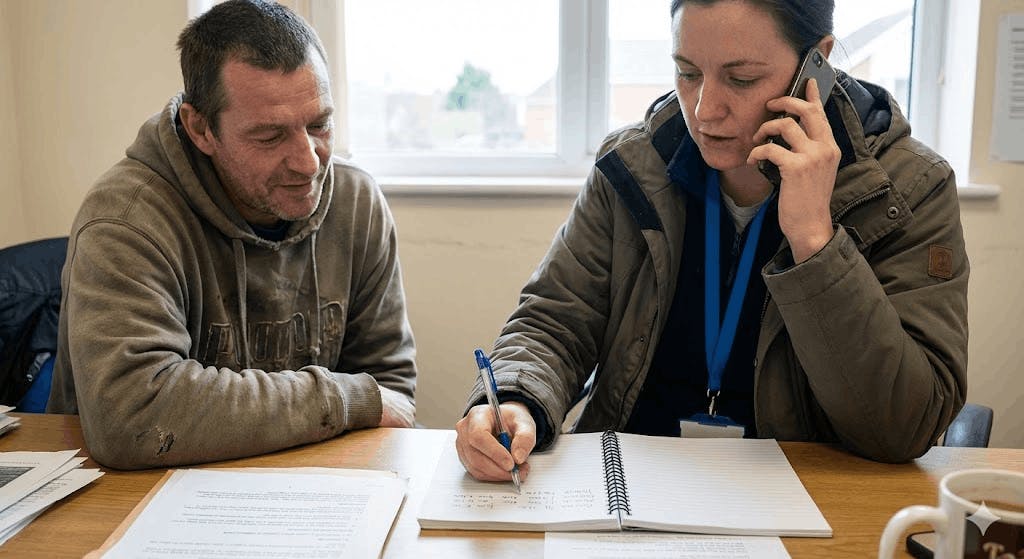
Discussing oral health can be a sensitive topic. Here are some strategies to bring it up without putting anyone on the spot:
- Ask about comfort, not teeth. Instead of focusing on dental issues, try asking, "Are you managing to eat okay?" or "Is there anything bothering you health-wise?" This approach opens the conversation while shifting the focus away from appearance.
- Notice signs. If you see someone not eating, holding their face, or avoiding smiling, you can gently inquire, "Is everything okay with your mouth?"
- Normalise the issue. You might say, "A lot of people we support have trouble with their teeth. It's really common." This helps reduce any feelings of shame associated with the topic.
- Don't push. If someone is reluctant to talk about their oral health, it's important to respect their feelings. You can always revisit the subject later.
Providing Basic Supplies
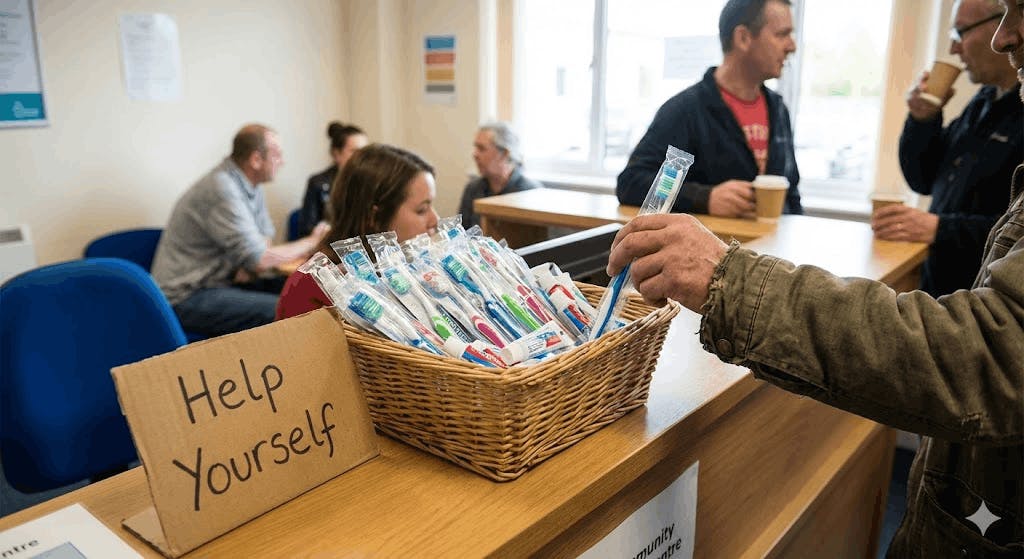
One of the simplest things you can do is provide toothbrushes and toothpaste.
What to stock:
- Toothbrushes (medium or soft bristles)
- Fluoride toothpaste (1450ppm fluoride is standard for adults)
- Small tubes, as they are easier to carry
- Sugar-free chewing gum (stimulates saliva, helps after eating)
How to offer them:
- Make supplies freely available, no questions asked.
- Include them in welcome packs or food parcels.
- Ensure they are visible so people can take them without asking.
Even if someone brushes only occasionally, it is beneficial. Some brushing is always better than none.
Recognising Problems That Need Dental Care
You don't need clinical training to spot warning signs. Here's what to look out for:
Needs routine dental care:
- Visible holes or dark spots on teeth
- Red, swollen, or bleeding gums
- Persistent bad breath
- Loose teeth
- Pain when eating hot, cold, or sweet foods
Needs prompt dental care:
- Constant toothache
- Broken or chipped teeth
- Lost fillings or crowns
- Sore patches in the mouth that don't heal
Needs urgent care (same day):
- Facial swelling
- Severe pain not controlled by painkillers
- Bleeding that won't stop
- Difficulty swallowing or breathing
- Fever with dental pain
For urgent problems, call NHS 111 or take the person to A&E if there's facial swelling with fever or breathing difficulty.
Supporting Access to Dental Care
Finding a dentist:
NHS dental care is available to everyone. No fixed address is required to register.³
Use the NHS Find a Dentist tool: www.nhs.uk/service-search/find-a-dentist
Call practices and ask if they're accepting NHS patients. If one says no, try another.
Some areas have specialist dental services for people experiencing homelessness. Ask your local authority or homeless health team what's available.
Helping with registration:
You can use a day centre, hostel, or support service address for correspondence.
No ID is required to register with an NHS dentist.
If someone has no address at all, they can still receive emergency dental treatment.
Preparing for appointments:
Offer to go with someone if they're anxious.
Help them write down what they want to say, including any pain or problems.
Remind them that dentists have seen everything. They won't be judged.
When appointments are missed:
Don't give up. Missed appointments are common. Offer to help reschedule.
Ask about the barriers that led to the missed appointment. Was it anxiety, forgetting, or something more urgent? Understanding these barriers can help.
When Someone Refuses Help
Some people may not be ready to engage with dental care; that's their choice. However, you can still:
- Provide toothbrushes and toothpaste without conditions
- Mention that dental care is available when they're ready
- Treat any visible infection as a health concern worth raising with a GP
- Come back to the conversation another time
Harm reduction means meeting people where they are. Any improvement helps.
Integrating Oral Health Into Your Work

Making It Routine
Oral health does not require a separate session; it can easily be incorporated into what you are already doing:
- During health discussions, inquire about teeth and mouth health alongside other health topics.
- When providing food parcels or supplies, include toothbrushes and toothpaste.
- If someone mentions pain or difficulty eating, investigate whether it could be related to dental issues.
- When assisting someone with a GP appointment, encourage them to consider mentioning any dental problems as well.
Small Wins Matter
Progress looks different for everyone, so it's important to celebrate even the smallest achievements:
- Someone accepting a toothbrush
- A conversation about dental pain
- One dental appointment, even if they don't return for follow-up
- Brushing a few times a week instead of never
Improvements in oral health are often gradual, and every step forward is significant.
Working With Dental Services
Build relationships with local dental services. Some practices are more experienced in handling complex needs, and community dental services often have greater flexibility.
If dental services in your area are not meeting the community's needs, it is essential to provide feedback. Commissioners need to be aware of any service gaps.
Consider whether your organisation could host a dental outreach session. In some areas, mobile dental units or dental teams visit hostels and day centres.
When Things Improve
When an individual's housing becomes more stable, their oral health often improves. Having access to a bathroom, a place to store a toothbrush, and a daily routine makes regular brushing feasible.
Oral health can play a vital role in recovery. Feeling confident enough to smile again is important, as is being able to eat without pain. These matters are far from trivial.
Quick Reference
What you can do without clinical training:
- Provide toothbrushes and toothpaste
- Start conversations about oral health
- Recognise signs that need dental attention
- Help people find and access dental services
- Support people to attend appointments
- Take a harm reduction approach
Key messages for people you support:
- NHS dental care is available. No fixed address needed.
- Dentists won't judge you.
- Even occasional brushing helps.
- Dental pain can be treated.
Urgent signs (same-day care needed):
- Facial swelling
- Severe uncontrolled pain
- Difficulty swallowing or breathing
- Fever with dental pain
When to Get Help
For urgent dental problems: Call NHS 111 or visit 111.nhs.uk
If someone has facial swelling with fever or breathing difficulty: Go to A&E
To find an NHS dentist: www.nhs.uk/service-search/find-a-dentist
For support with homeless health services: Contact your local authority or Integrated Care Board homeless health team


