

You're supporting someone to access dental care. They might have religious practices that affect appointment timing, or different expectations about treatment, and you're not sure how to have that conversation without making assumptions.
It’s important to recognise that beliefs about oral health are shaped by culture, religion, and personal experiences. For example, what may seem like reluctance could actually stem from concerns about fasting during Ramadan. Likewise, an apparent neglect of baby teeth might stem from a genuine belief that they are not important since they will eventually fall out.
Understanding these perspectives enables you to provide better support.
If you're unsure how to engage in respectful conversations about oral health across cultures, what questions to ask, or how to explain UK dental practices in a culturally relevant way, this guide is for you.
Why Cultural Awareness Matters
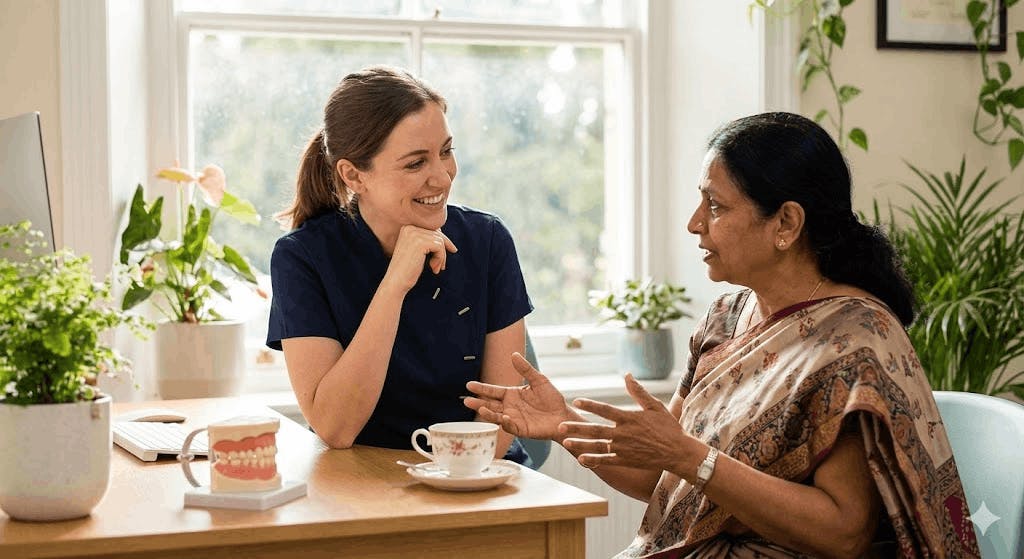
Culture, religion, family, and personal experiences shape people's beliefs and practices about health, including oral health. Understanding a person's background enables more effective communication and better conversations. You can ask appropriate questions, explain concepts in ways that resonate with them, and avoid making assumptions that create barriers.
This guide is not about memorising facts about different cultures; instead, it encourages developing curiosity and respect. It emphasises the importance of asking questions rather than making assumptions, and of recognising that each individual is shaped by their background but not solely defined by it.
The refugees and asylum seekers you support come from various countries, cultures, and religions. There is no single "refugee experience." What they do share is the experience of displacement and rebuilding, not a uniform set of beliefs about oral health.
Your role is not to become an expert on every culture. Instead, be open, respectful, and willing to learn from each person you work with.
Understanding Different Perspectives
Diversity Within Communities
Refugees arriving in the UK come from various countries around the world, including Syria, Afghanistan, Eritrea, Sudan, Ukraine, Iran, and many more. Each of these countries has considerable diversity in terms of language, religion, ethnicity, and social background.
For instance, a family from Aleppo may have very different experiences and beliefs compared to a family from rural Syria. Similarly, an Afghan professional from Kabul might view health differently from someone from a rural province. Additionally, someone raised in a city with an established healthcare infrastructure may have different expectations than someone who has never had access to dental services.
It is important to remember that the individual you are interacting with is the expert on their own life. Taking the time to ask about their knowledge, beliefs, and needs can make them feel empowered and respected in their approach.
Religious Considerations
Religion shapes many aspects of daily life, including health practices. The following considerations may be relevant to oral health service delivery.¹
Ramadan and fasting
During Ramadan, many Muslims fast from sunrise to sunset, which means they avoid all food and drink, including water, during daylight hours.
Dental appointments during Ramadan are generally acceptable, but some individuals prefer to schedule them outside of fasting hours. There are concerns about the need to swallow water during dental treatment. It's important to reassure patients that rinsing and spitting is usually considered acceptable under religious guidance. However, it may be wise for them to consult their own religious authorities for clarification.
Fasting can lead to xerostomia, or dry mouth, which may increase the risk of dental caries and periodontal disease. To mitigate these risks, encourage thorough brushing with fluoride toothpaste containing 1,350–1,500ppm fluoride (commonly 1450ppm) before the fast begins and again after breaking the fast in the evening.¹
Other religions also observe fasting practices, so it's a good idea to ask patients if there are specific times when scheduling appointments might be problematic for them.
Gender preferences
Some individuals, for religious or cultural reasons, prefer to consult healthcare professionals of the same gender. While this preference is more common among women, some men may share it as well.
When booking a dental appointment, it's a good idea to ask if the individual has a gender preference. Not all practices can accommodate such requests, but many can. Inquiring in advance is preferable to discovering any incompatibility on the day of the appointment.
Modesty considerations
Some individuals may feel uncomfortable removing head or face coverings for dental treatment. This should be discussed with sensitivity. While a dental examination requires access to the oral cavity, practitioners can often accommodate preferences with advance notice.
Attitudes to Dental Care
Expectations of dental care vary substantially depending on previous healthcare experiences.²
Preventive care may be unfamiliar
In many countries, dental care is often sought only when pain or acute issues arise. The idea of attending dental appointments for routine "check-ups" when no symptoms are present may seem unfamiliar or unnecessary.
However, in the UK, dentists emphasise prevention rather than just treating existing problems. Regular examinations can allow for the early detection of issues before they become painful or require more complex treatments. This preventative approach is especially crucial for children, as their teeth are still developing.
Extraction as standard treatment
In some healthcare systems, tooth extraction is considered the standard treatment for problematic teeth. Restorative options, such as fillings or root canal therapy, may be less common or unavailable.
Some individuals may expect or even request extraction, while UK dentists typically recommend preserving the tooth whenever possible. Dentists will explain the available treatment options, and it is the support worker's role to help individuals understand that the preservation of natural teeth is the primary goal in UK dentistry when it is clinically feasible.
Attitudes to primary dentition
Many parents believe that primary (baby) teeth do not require attention because they will eventually fall out. This belief is common across various cultures.
However, primary teeth serve important functions. They enable proper chewing and speech development and maintain the space needed for permanent teeth to erupt. Cavities in primary teeth can lead to pain, infection, and issues for the developing permanent teeth.
When discussing this topic, it is essential to approach it sensitively. Parents desire the best outcomes for their children, so it is helpful to present this information as knowledge they may not have previously received rather than as criticism of their parenting practices.
Traditional Practices
Many cultures have traditional oral health practices that should be approached with curiosity rather than judgment.
Miswak (siwak)
The miswak is a teeth-cleaning stick, traditionally sourced from the Salvadora persica tree. It is commonly used in many Muslim communities and other cultures. With a history spanning millennia, there is substantial evidence supporting its effectiveness in removing plaque and its antibacterial properties.
Miswak can be used alongside regular tooth brushing or as an alternative when a toothbrush is unavailable. If someone uses miswak, it’s important to acknowledge this positively. If they are also willing to use fluoride toothpaste containing 1,350–1,500ppm fluoride (commonly 1450ppm), with or without a toothbrush, this provides additional protection against decay.
Other traditional remedies
Individuals may also mention using salt water, charcoal, herbs, or other substances for oral care. It's important to listen with genuine interest. While some traditional practices may be beneficial, others may be neutral or even harmful.
Instead of dismissing these practices, focus on the most critical aspects: regular mechanical cleaning (in whichever form it is practised) and exposure to fluoride for protection against cavities. If any traditional practice appears potentially harmful, explain your concerns constructively and suggest evidence-based alternatives.
Diet and Oral Health
Food is deeply connected to cultural identity. Dietary modification recommendations can affect both identity and family traditions, especially when individuals face resource constraints.
Sugar in the diet
Sweet tea, sugary beverages, and sweet foods are prevalent in many cultures. Dried fruits, honey, and traditional sweets often play significant roles in family and religious celebrations.
It's essential to avoid making judgments about food choices. Instead, focus on practical, evidence-based guidance:
- The frequency of sugar exposure is more critical than the total amount consumed. Frequent sugary snacks and drinks between meals can cause more harm than sugar consumed during mealtimes.
- Drinking water or milk between meals helps protect teeth. Sweet drinks should be limited to mealtimes.
- Waiting at least 30 minutes after consuming acidic or sugary foods before brushing helps protect tooth enamel from erosion.
Limited food choices
Asylum seekers in initial accommodations often have minimal control over their dietary choices. Those living on limited budgets may rely on inexpensive processed foods that are usually high in sugar.
Be realistic about what individuals can change in their diets. Focus on factors they can control, such as choosing tap water instead of sugary beverages or brushing thoroughly with fluoride toothpaste.
Practical Approaches
Working with Interpreters
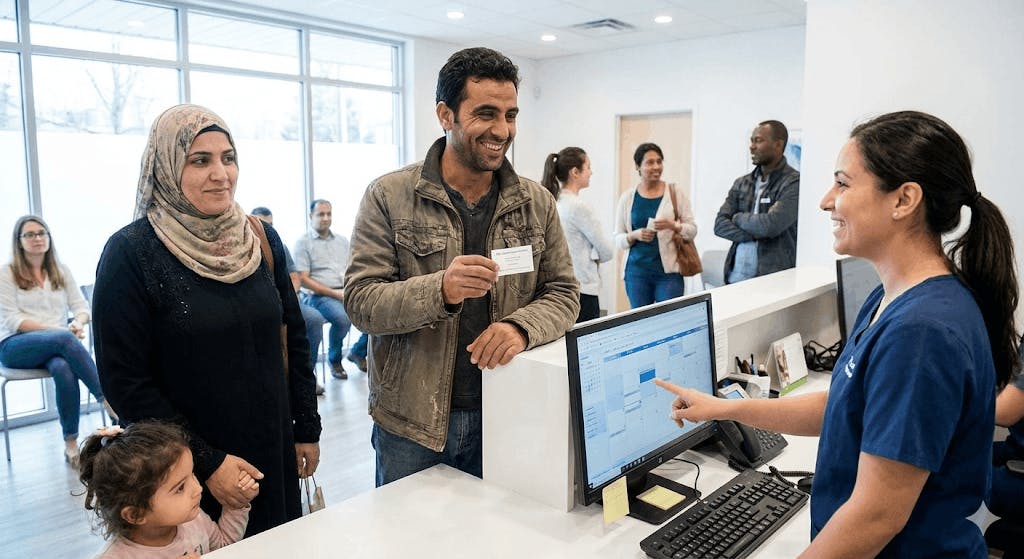
Clear communication is essential for health-related discussions. Professional interpreters facilitate effective communication.
Always use professional interpreters for health appointments. Family members, especially children, should not serve as interpreters. Medical conversations often involve confidential information and complex concepts. It is not appropriate to place this responsibility on children, as family dynamics can compromise accurate communication.
When booking a dental appointment, specify the required language and request interpretation services. Dental practices are expected to provide these services at no cost to the patient.
During appointments, address the patient directly instead of speaking to the interpreter. Use simple, clear language and pause regularly to allow for interpretation.
Having Effective Conversations
The most productive conversations start with genuine curiosity rather than assumptions.
Ask open-ended questions
- "Have you accessed dental care before? What was that experience like?"
- "What knowledge do you already have about maintaining oral health?"
- "Do you have any concerns about dental care?"
- "Do you have a preference regarding the gender of your dentist?"
- "Is there anything the dentist should know about your beliefs or preferences?"
Explain the UK approach
If preventive dental care is unfamiliar, explain it clearly and simply.
"In the UK, dentists prefer to see patients regularly, even when there are no visible symptoms. This enables early detection of small problems before they require more complex interventions. This may differ from healthcare systems you have encountered before, but it helps prevent pain and more serious issues from developing."
Normalise the conversation
Many individuals feel embarrassed about their dental health. It's important to normalise this situation.
- "Many people I work with have not been able to access dental care for some time. This is completely understandable given the circumstances you have experienced."
- "Dental anxiety is very common. Dental teams in the UK are experienced in supporting anxious patients."
Supporting Children's Oral Health
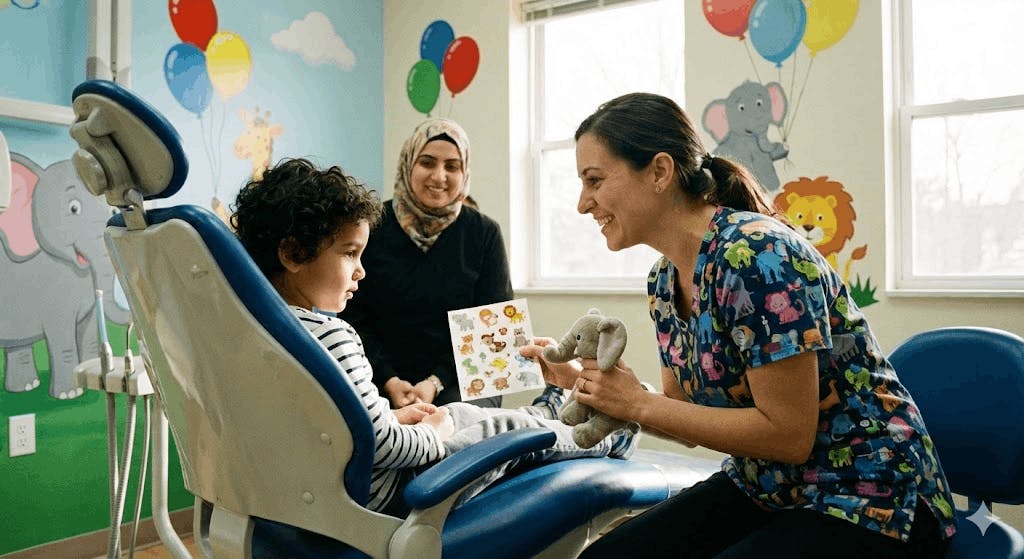
Parents strive for the best outcomes for their children. It’s important to frame oral health guidance in a way that supports child health and well-being rather than seeming critical of parenting choices.
Explain the importance of primary dentition.
“Primary teeth play crucial roles in eating, speaking, and facial development. They also maintain space for permanent teeth that will emerge later. Keeping primary teeth healthy is essential for children’s overall health and comfort.”
Approach sugar consumption sensitively
Rather than directive statements such as "do not give your child sweets", offer practical alternatives.
"Children naturally enjoy sweet foods, which is developmentally normal. What helps protect teeth is limiting sweets and sugary drinks to mealtimes rather than consuming them frequently throughout the day. Water and milk are the optimal beverages between meals."
Provide multilingual resources
The British Society of Paediatric Dentistry has produced a practical guide to children's dental health, available in nine languages: English, Arabic, Urdu, Somali, Tigrinya, Dari, Pashto, Albanian, and Ukrainian.³
Offer these resources to families. Having information in their first language increases parental confidence and makes key health messages more accessible.
Encourage early dental attendance
In the UK, children should have their first dental appointment by their first birthday.⁴ While this may seem early to parents unfamiliar with preventive dental care, it is important to explain that early visits help children become comfortable in dental settings and enable early detection of any issues.
Building Trust Over Time
Single conversations rarely produce immediate behaviour change. Trust and understanding develop gradually over time.
Initial conversations open pathways for engagement. Even brief discussions about oral health establish you as an accessible information source. The individual may not act immediately, but they know you are someone they can approach.
Oral health can become part of routine check-ins. As professional relationships develop, you can inquire about progress. "Were you able to schedule that dental appointment?" "How are your children's teeth?"
Respect individual autonomy and readiness. If someone is not ready to engage with dental services, that is their decision. You can offer information and support, but decisions remain theirs. Maintain an open, non-judgmental stance for when they become ready to engage.
Expertise is not required. You need curiosity and respect. You need sufficient knowledge to facilitate helpful conversations and connect people with appropriate services.
The individuals you support have already navigated substantial challenges to reach the UK. They possess resilience and resourcefulness. Your role is to provide information and facilitate access, not to manage their health decisions.
Quick Reference
Key principles:
- Ask, do not assume. Every person is an individual.
- Diversity exists within communities, not just between them.
- Approach traditional practices with curiosity, not judgment.
- Always use professional interpreters for health conversations.⁵
- Frame guidance positively. Parents want optimal outcomes for their children.
Religious considerations to be aware of:
- Ramadan fasting may affect appointment timing and cause xerostomia (dry mouth).
- Some individuals prefer same-gender healthcare professionals.
- Modesty considerations may require discussion before treatment.
When discussing children's oral health:
- Explain the importance of primary dentition.
- Focus on frequency of sugar exposure, not just total amount.
- Provide BSPD multilingual resources where available.
- Encourage dental attendance from age one.
Useful phrases:
- "Have you accessed dental care before? What was that experience like?"
- "Do you have any concerns about dental care?"
- "Do you have a preference regarding the gender of your dentist?"
- "In the UK, dentists focus on preventing problems, not just treating established disease."
When to Get Help
Contact a dental professional if the individual you support or their child has:
- Dental pain or toothache
- Visible caries (dark spots or cavities in teeth)
- Swollen, erythematous, or bleeding gingiva (gums)
- Difficulty eating due to dental problems
- An avulsed tooth (urgent)
- Facial swelling (urgent)
If you have concerns that a child may be experiencing dental neglect, follow your organisation's safeguarding procedures. Untreated dental caries causing pain and affecting daily functioning can constitute a child protection concern.
If a family is struggling to engage with dental services despite your support, consider whether additional assistance might be beneficial. Some areas have community dental services offering outreach or domiciliary visits. Contact your local oral health promotion team.


