

As someone approaches the end of life, care priorities shift from treatment and prevention to comfort, dignity, and presence. At this stage, oral health and mouth care become increasingly important, and your efforts can significantly affect someone in their final moments.
Dry mouth is common among people approaching the end of life and is caused by medications, mouth breathing, and reduced consciousness, which quickly dries the mouth.¹ Without proper care, lips may crack and bleed, the tongue can stick to the roof of the mouth, and oral infections such as thrush may occur.
If you're unsure about how often to perform mouth care, which products are suitable for those who can't spit, or how to keep someone comfortable in their last days, this guide is here to assist families and carers alike.
Why Mouth Care Matters at the End of Life

Mouth care remains one of the most important modes of care as a person approaches the end of life. In many ways, it becomes more important than ever.
You see, a dry, uncomfortable mouth can cause real distress as it can make someone feel thirsty even when they can't drink. It can also make breathing feel harder and can be one more source of discomfort at a time when comfort matters most.
Good mouth care helps someone feel more at ease. A moist mouth is more comfortable. Clean lips don't crack and bleed. Gentle care around the mouth can soothe.
This is comfort care. It doesn't change the course of the illness, but it makes a genuine difference to how someone feels.
When families are involved in keeping someone's mouth comfortable, it can strengthen bonds and provide reassurance during a difficult time.
Common Mouth Problems at End of Life
Several mouth issues frequently occur in palliative care. Recognising their causes helps improve care.
Dry Mouth
Dry mouth is common at the end of life and can cause a sticky, uncomfortable sensation.¹ The tongue may appear dry or coated, with saliva becoming thick or absent.
Why does it happen:
- Medications like opioid painkillers, anti-sickness drugs, and sedatives
- Mouth breathing
- Oxygen therapy
- Decreased fluid intake
- Reduced consciousness
- General weakness
Dry mouth causes discomfort and can hinder swallowing, speech, or taste. It can increase the risk of oral infections.
Sore Mouth
The mouth may become sore due to dryness, infections, or ulcers, making eating and drinking uncomfortable, even in small amounts.
Oral Thrush
Thrush shows as white patches on the tongue, roof of the mouth, or inside cheeks. It's a fungal infection that's common when immunity is low, causing discomfort and changes in taste. It typically requires antifungal treatment.
Coated Tongue
Accumulation on the tongue is common with minimal eating and drinking. Mouth breathing worsens this, resulting in a white, yellow, or brown coating.
Cracked Lips
Dry, cracked lips are common from mouth breathing and dehydration. They can become sore and may bleed.
Taste Changes
Many in palliative care experience altered taste perceptions. Food and drinks may taste metallic, different, or unpleasant, often due to medications or illness.
Managing Dry Mouth

Dry mouth is a common issue that can cause significant discomfort. Effective management can make a meaningful difference in alleviating this problem.
Keeping the Mouth Moist
The aim is to keep the mouth as moist as possible, which requires regular mouth care during the day and at night.²
How often: Mouth care is usually provided every one to two hours when the person is awake or settled. In the final days of life, this may increase to every 30–60 minutes.²
Small sips of water: If the person can swallow safely, offer small sips of water frequently rather than large amounts at once.
Mouth gels: Water-based mouth gels provide longer-lasting moisture than water alone. Apply these gels to the tongue, inside the cheeks, and gums. Examples include Biotene Oral Balance, Oralieve, and BioXtra.
Artificial saliva: Sprays and gels that mimic natural saliva can be used frequently for relief.
Damp gauze or soft cloth: Gently wipe the inside of the mouth with a gauze pad or soft cloth dampened with water to clean and moisturise simultaneously.
Soft toothbrush: A soft toothbrush dipped in water can help moisten the mouth. Brush lightly over the tongue and gums.
What Can Help
- Ice chips: If safe to swallow, small ice chips can be soothing as they melt slowly and provide moisture.
- Frozen fruit pieces: Small pieces of frozen fruit, such as melon or grapes, can be refreshing. Avoid citrus fruits if the mouth is sore, as their acidity can irritate.
- Pineapple: Fresh or tinned pineapple contains enzymes that may help reduce coating on the tongue
- Sugar-free sweets or gum: Sugar-free sweets or gum may stimulate saliva production if the person is able to use them safely.²
- Cool water misting: A small spray bottle filled with water can be used to gently mist the mouth.
What to Avoid
Glycerine and lemon swabs: These were previously used but are no longer recommended.³ Glycerin draws moisture out of tissues, worsening dryness, while lemon is acidic, which can damage tooth enamel and irritate sore areas.
Alcohol-based mouthwash: Alcohol is drying and can cause stinging. If mouthwash is desired, choose an alcohol-free version.
Petroleum-based lip products: Petroleum-based lip products carry a small risk of aspiration if inhaled.
Lip Care
Dry, cracked lips are uncomfortable and can bleed.
What to use: Apply a water-based lip balm regularly, at least once during each mouth care routine.
What to avoid: Do not use petroleum jelly, Vaseline, or any petroleum-based products. These carry a small risk of aspiration into the lungs.
How often: Apply lip balm every one to two hours or whenever the lips appear dry.
Equipment and Products
Having the right equipment can make mouth care easier and safer.
What to Use
- Soft toothbrush: A soft-bristled brush, or a baby or child-sized brush, is gentle on sensitive mouths. Even at the end of life, a toothbrush is the most effective tool for cleaning.
- Non-foaming toothpaste: Standard toothpaste can foam excessively, making it difficult to manage. Non-foaming options are available. Alternatively, if toothpaste isn't tolerated, you can use water only.
- Water-based mouth gels: Products like Biotene Oral Balance, Oralieve, BioXtra, or similar options provide moisture and protection for the mouth.
- Artificial saliva sprays: These can be used frequently to relieve dryness.
- Soft gauze or sponge sticks: Useful for moistening the mouth. Be sure to check sponge sticks carefully before use (see safety note below).
- Water-based lip balm: For regular lip care.
- Small bowl or cup: For holding water.
- Soft towel: To protect clothing and bedding.
What NOT to Use
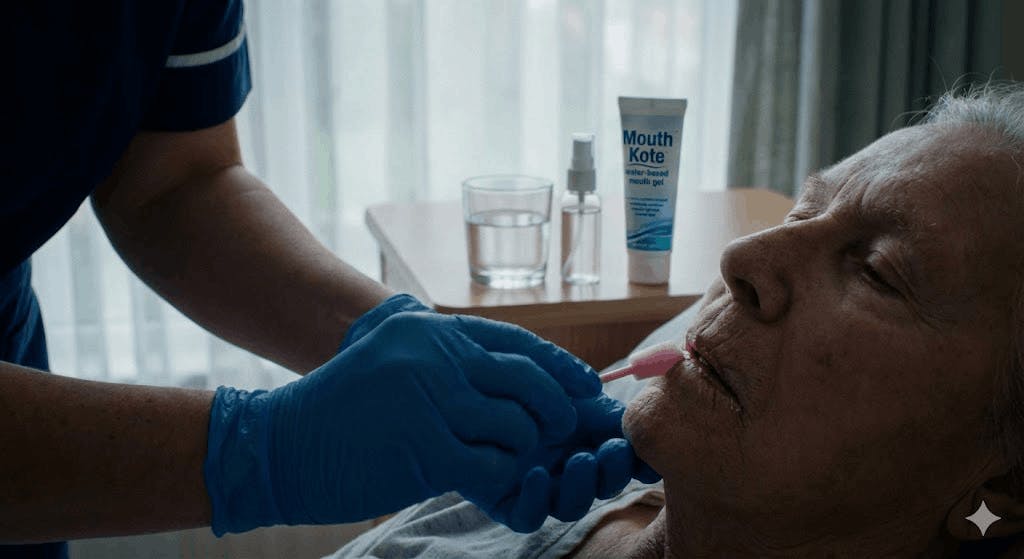
Pink foam sponges for cleaning: Pink foam sponge sticks are no longer recommended for cleaning teeth.³
Glycerine and lemon swabs: These can worsen dryness, so do not use them.
Alcohol-based mouthwash: These products can be too drying. If mouthwash is desired, choose alcohol-free alternatives.
Petroleum-based lip products: These carry a risk of aspiration. Opt for water-based balms instead.
Practical Mouth Care Techniques
How you provide mouth care depends on the individual's condition and their ability to participate.⁴
For Someone Who Is Conscious and Can Participate
When a person is awake and able to help, involve them as much as possible:
- Explanation is key. Communicate what you're doing. For example, say, “I’m going to help freshen your mouth.”
- Positioning. Help them sit up or raise the head of the bed. A semi-upright position is more comfortable and safer.
- Use a soft toothbrush. Apply a small amount of non-foaming toothpaste, or just use water.
- Brush gently. Clean all surfaces of the teeth if they have natural teeth, and brush the tongue gently if they can tolerate it. Avoid scrubbing or pressing hard.
- Encourage spitting. If they can, let them spit into a bowl or tissues. If they struggle to spit, use gentle suction or wipe away excess with gauze.
- Apply mouth gel. Use your finger or a soft brush to apply gel to the tongue, cheeks, and gums.
- Finish with lip balm. Apply water-based lip balm to keep lips moist.
For Someone Who Is Drowsy or Has Limited Awareness
When someone is sleepy or less aware, mouth care becomes gentler and more focused on comfort.
- Keep the mouth moist. This is the top priority. Use mouth gel, artificial saliva, or gauze dampened with water.
- Gentle cleaning. If tolerated, use a soft brush to clean the teeth and tongue. Stop if they show any signs of discomfort.
- Watch for signs of distress. If they grimace, pull away, or seem agitated, pause or stop the mouth care.
- Focus on comfort, not thoroughness. A gentle wipe with a damp cloth may be all that's needed.
- Frequency. Provide mouth care every one to two hours, and more often if the mouth is very dry.
For Someone Who Is Unconscious
When someone is unconscious, mouth care is purely about comfort. They can't participate, but their mouth still needs care.
- Position carefully. Turn their head to one side or position them on their side to prevent anything from going to the back of the throat.
- Have suction available. If there are many secretions, use suction gently if necessary.
- Clean Gently. Use a soft brush or damp gauze to apply very gentle strokes inside the mouth. Do not put water directly into the mouth to avoid inhalation.
- Apply mouth gel. Use your finger or a soft brush to apply gel to the tongue, inside the cheeks, and gums. This keeps tissues moist.
- Lip balm regularly. Apply every time you provide mouth care.
- Increase frequency. In the final stages, mouth care every 30 minutes to one hour will help maintain comfort.
Positioning
Proper positioning prevents aspiration (liquid entering the lungs):
- The semi-upright position is ideal.
- If lying flat, turn their head to one side.
- Ensure any liquid can drain out rather than back into the throat.
- Keep suction nearby if secretions are an issue.
Mouth Care in the Final Days
In the last days and hours of life, mouth care shifts to focus solely on comfort.⁵
What Changes
Frequency increases. Mouth care is usually provided every 1 to 2 hours while the person is awake or settled. In the final days of life, this may increase to every 30–60 minutes.²
Cleaning becomes less important. Thorough cleaning is no longer the priority. The main aim is to keep the mouth moist and comfortable.
Gentleness is everything. Use the lightest touch and the smallest amount of moisture to provide comfort without causing distress.
Taste for Pleasure
If someone is no longer eating or drinking, small amounts of their favourite drinks can be used to moisten the mouth, a practice known as "taste for pleasure."
A few drops of tea, coffee, fruit juice, or even wine or beer can be placed on a sponge stick or gauze and gently touched to the lips and tongue. This is not meant for nutrition or hydration but for comfort and connection.
Always discuss with the care team before offering anything by mouth to ensure safety and appropriateness. Always follow local policy and advice from the palliative care team.⁵
What Families Can Do
Mouth care is something families can assist with, providing an opportunity to stay close and offer comfort:
- Demonstrate Techniques. Show how to apply lip balm and mouth gel. Explain that this contributes to comfort care.
- Reassure Them. Confirm that their involvement is meaningful and helps the individual.
- Let Them Help. Many families find comfort in being involved in care, even in small ways.
- Be Supportive. The first time can be overwhelming. Stay with them and provide gentle guidance.
Signs the Mouth Is Comfortable
- Lips appear moist, not dry or cracked.
- The tongue is not dry, coated, or sticking to the roof of the mouth.
- There are no signs of mouth-related distress.
- The person has a peaceful expression.
When Mouth Care Is Difficult
Even gentle mouth care can sometimes cause distress. If you notice grimacing, turning away, or agitation, it’s best to stop.
It's more effective to do a little, gently, than to create distress. A light application of lip balm and mouth gel may be all that is tolerated, and that is perfectly sufficient.
Quick Reference
Why mouth care matters:
- Comfort and dignity
- Prevents distressing dryness
- Something meaningful you can do
How often:
- Every 1-2 hours normally
- Every 30-60 minutes in the final days
What to use:
- Soft toothbrush
- Non-foaming toothpaste or water
- Water-based mouth gels (Biotene, Oralieve)
- Water-based lip balm
- Gauze dampened with water
What NOT to use:
- Pink foam sponges for cleaning (choking risk)³
- Glycerine and lemon swabs (worsen dryness)
- Alcohol-based mouthwash (drying)
- Petroleum-based lip products (aspiration risk)
For unconscious individuals:
- Position the head to one side
- Don't put water into the mouth
- Apply mouth gel and lip balm frequently
- Focus on comfort, not cleaning
Families can help:
- Applying lip balm
- Applying mouth gel
- Being present
When to Get Help
Signs of problems that need attention:
- White patches in the mouth (may be thrush, which needs treatment)
- Bleeding that doesn't stop
- Ulcers or sore areas that seem very painful
- Signs of significant distress related to the mouth
- Difficulty managing secretions
Who to contact:
- Senior nurse or care lead
- Palliative care team or hospice team
- GP if in the community
- Out of hours services if urgent
Remember: At the end of life, the goal is comfort. If something is causing distress, it's right to ask for help.⁶ The palliative care team can advise on managing symptoms and ensuring comfort.

