

Mouth care is often overlooked in care settings, not out of neglect but due to the busy nature of managing medications, meals, and other aspects of the care plan. Those few minutes needed for brushing can easily be forgotten.
However, neglecting mouth care can lead to infections that may result in hospitalisations. Additionally, having a sore mouth can make eating painful. Loose or dirty teeth can cause embarrassment and discomfort, which the individual may not be able to communicate.
If you are unsure how to position someone for assisted brushing, the level of support to provide, or what to document in care plans, this guide is for you.
Why Mouth Care Matters
Mouth care is an important aspect of personal hygiene that helps individuals feel respected and dignified, much like washing and dressing. This care reinforces their self-esteem.
Unfortunately, mouth care is often overlooked when time is limited, even though dedicating just a few minutes to it can significantly improve someone's comfort and health.
A sore mouth can make eating painful, while loose or dirty dentures can lead to silent embarrassment. Additionally, poor oral care can lead to infections that may spread throughout the body. Research indicates that bacteria from the mouth can be inhaled into the lungs, leading to chest infections and aspiration pneumonia¹, which poses a serious risk for individuals who have difficulty swallowing or who spend long periods lying down.
Conversely, good mouth care allows people to eat comfortably, speak clearly, and feel confident. It helps prevent hidden pain that someone may not be able to communicate.
You already possess the skills needed to enhance mouth care. By applying the same gentle, person-centred approach you use for other personal care tasks, along with the guidance in this article, you will be well on your way to ensuring happy, healthy mouths for those in your care.
Getting Set Up
What You Need
For each person, you'll need the following:
For natural teeth:
- A soft-bristled toothbrush (replace it every three months or when the bristles start to splay).
- Fluoride toothpaste containing 1,350–1,500ppm fluoride (commonly 1450ppm).
For dentures:
- A denture brush (which has stiffer bristles than a standard toothbrush).
- A labelled denture pot for overnight storage.
- Plain water for storage (do not use denture tablets for overnight soaking).
For partial dentures:
- All of the above: both a toothbrush for natural teeth and a denture brush
Some individuals may also benefit from interdental brushes to clean between teeth. Consult the person's dentist if you're unsure.
What NOT to Use
Avoid using pink foam sponges on sticks for cleaning. They are not recommended as they clean poorly and pose a choking risk if the sponge detaches.² A soft toothbrush is a better option.
Why Fluoride Matters
Fluoride strengthens teeth and helps prevent decay. Check the toothpaste tube shows 1,350–1,500ppm fluoride (commonly 1450ppm).³
After brushing, encourage the person to spit out the toothpaste but not to rinse with water. This helps keep the fluoride on the teeth for longer-lasting protection.
Checking the Mouth
Each time you provide mouth care, perform a quick check for any problems:
- Red, swollen, or bleeding gums
- Broken or loose teeth
- White patches or ulcers
- Sore areas, especially under dentures
- Signs of pain when you touch certain areas
If you notice any of these problems, record them in the care plan and report them to a senior colleague.
Daily Mouth Care Step by Step

Mouth care should be performed twice a day, ideally in the morning and before bed.² This schedule easily fits into existing personal care routines.
Supporting Someone Who Can Brush Themselves
Many individuals can manage their own brushing with some support. Your role may include:
- Reminding: Gently prompt them when it’s time to brush. Hand them their toothbrush and toothpaste.
- Setting Up: Apply toothpaste to the brush and ensure water is available for rinsing. Stay nearby in case they need assistance.
- Checking: Confirm that all areas have been brushed and offer help with any spots they may have missed.
Encourage independence whenever possible. Even if someone’s technique isn’t perfect, maintaining the habit is what matters.
Helping Someone Who Needs Assistance
Some individuals require assistance with brushing their teeth. While this may feel unfamiliar at first, it becomes straightforward with practice.
Positioning:
- Ask the person to sit upright if possible, as this is safer and more comfortable.
- Stand slightly behind and to one side of them; this gives you the same angle as if you were brushing your own teeth.
- Gently support their head with your free hand if necessary.
- Ensure you have good lighting to see what you are doing.
Technique:
- Use a pea-sized amount of toothpaste containing 1,350–1,500ppm fluoride (commonly 1450ppm).
- Brush gently using small circular movements.
- Clean all surfaces: the outer surfaces (facing the cheeks), the inner surfaces (facing the tongue), and the biting surfaces.
- Pay attention to the areas where the teeth meet the gums.
- Gently brush the tongue to remove bacteria.
- Take your time; aim for two minutes, but do what you can.6
- Ask the person to spit out the toothpaste and avoid rinsing with water.
- If the person cannot spit, use a smaller amount of toothpaste and wipe gently with gauze.
Denture Care
Partial Dentures: Two Steps, Not One
It is essential to understand that individuals with partial dentures still have natural teeth, which need to be cared for as well. Therefore, they must:
- Clean their partial denture (see cleaning steps below).
- Brush their remaining natural teeth with fluoride toothpaste, as described above.
Having a partial denture does not eliminate the need for brushing natural teeth. In fact, special attention should be given to the areas around the clips that hold the denture in place.
The routine:
- Remove the partial denture.
- Clean the denture (see cleaning steps below).
- Brush all remaining natural teeth with toothpaste containing 1,350–1,500ppm fluoride (commonly 1450ppm).
- Encourage the person to spit rather than rinse.
- Refitting the denture should occur during the day, or it can be stored overnight.
Full Dentures: When There Are No Natural Teeth
Even if someone has no natural teeth, oral care is still necessary. It’s important to clean dentures twice a day and to gently brush the gums, tongue, and roof of the mouth with a soft toothbrush. This practice helps remove bacteria and maintain a healthy mouth.
Cleaning Dentures
Follow these steps to clean both full and partial dentures:
Removing dentures:
- Wash your hands and put on gloves.
- Ask the person to relax their lips.
- For upper dentures, gently break the seal by pulling down from the back.
- For lower dentures, gently lift and ease them forward.
- Be careful not to drop the dentures.
Cleaning:
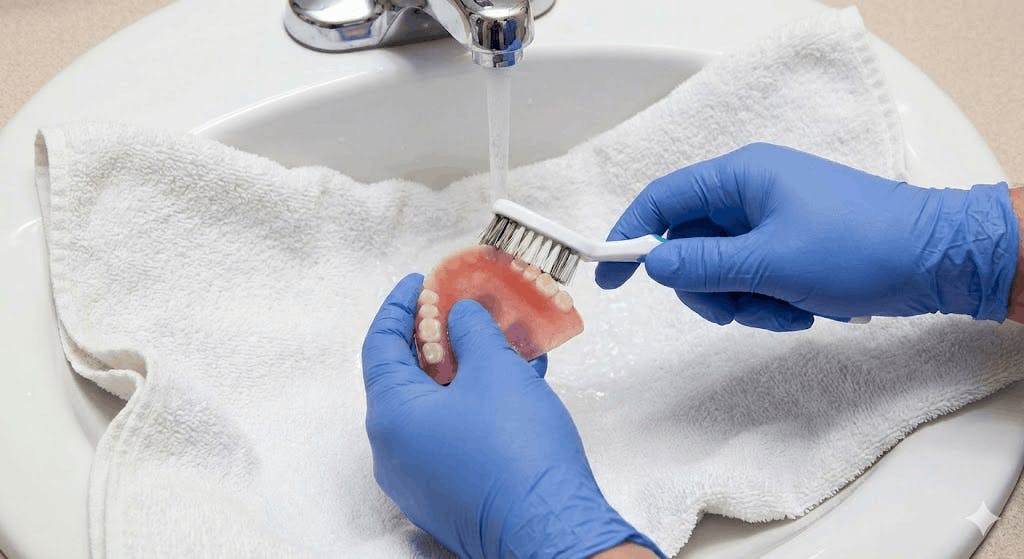
- Hold the denture over a basin of water or a folded towel to prevent breakage if it falls.
- Brush all surfaces with a denture brush and water. You may use unperfumed soap if necessary, but avoid using regular toothpaste, as it can scratch the surface.
- Pay special attention to areas that contact the gums and any clips on partial dentures.
- Rinse thoroughly under running water.
- Check for any cracks, chips, or rough areas that could cause sores.
Overnight storage:
- Dentures should be removed overnight to give the gums a chance to rest and help prevent infections like oral thrush.²
- Store the dentures in a labeled denture pot with the person's name on it.
- Cover them with plain cold water.
- Avoid using denture tablets for overnight storage, as they can damage the denture over time.
- In the morning, rinse the dentures with water and then refit them.
Preventing Lost Dentures
Lost dentures can cause distress and can be expensive to replace. Clearly labeling denture pots and designating a consistent storage area can help prevent loss. Some services even offer denture marking, which involves engraving the person’s name directly onto the denture.4
Recording Mouth Care
Keeping accurate records is essential for providing consistent care. Be sure to note the following in the care plan:
- The level of support the person needs (reminding, assistance, or full support).
- Whether they have natural teeth, partial dentures, full dentures, or a combination of these.
- Any preferences or specific strategies that help the person with mouth care.
- Any issues or concerns that you may have observed.
Record each time mouth care is completed. This documentation provides evidence for CQC inspections and helps ensure that mouth care is not overlooked.5
When Things Don't Go to Plan
Not every day will be perfect. The individual may be tired, unwell, or simply not in the mood for mouth care. If mouth care doesn't occur in the morning, try again later or switch to focusing on the evening routine.
What matters is consistency over time. Aim for: “Good enough, often enough.”
If someone frequently refuses mouth care, consult a senior colleague. There may be underlying issues, such as pain, ill-fitting dentures, or anxiety. Colleagues who work with individuals living with dementia may have helpful strategies to address these challenges.
Quick Reference
Twice daily mouth care:
- Brush natural teeth with 1,350–1,500ppm fluoride (commonly 1450ppm)
- Spit out toothpaste, don't rinse with water
- Partial denture wearers: clean denture AND brush remaining natural teeth
- Clean dentures with a denture brush and water
- Remove dentures overnight and store in a labelled pot with water
- Check the mouth for problems each time
- Record what you've done
Equipment checklist:
- Soft-bristled toothbrush
- Fluoride toothpaste 1,350–1,500ppm fluoride (commonly 1450ppm)
- Denture brush (if needed)
- Labelled denture pot (if required)
- Gloves
- Good lighting
When to Get Help
Contact a dentist or speak to a senior colleague if you notice:
- Pain or discomfort in the mouth
- Red, swollen, or bleeding gums that don't improve
- Loose, broken, or sharp teeth
- White patches, ulcers, or sores lasting more than two weeks
- Dentures that no longer fit properly or cause sore areas
- Difficulty eating or swallowing
- Bad breath that doesn't improve with regular mouth care
How to access dental care:
- Most people can see a general dental practice. Ask the person or their family if they're registered with a dentist.
- For people who can't travel to a dental surgery, Community Dental Services can provide domiciliary visits.² Ask your manager or local NHS services about availability in your area.
- For urgent problems outside regular hours, NHS 111 can provide advice and direct you to emergency dental care.

